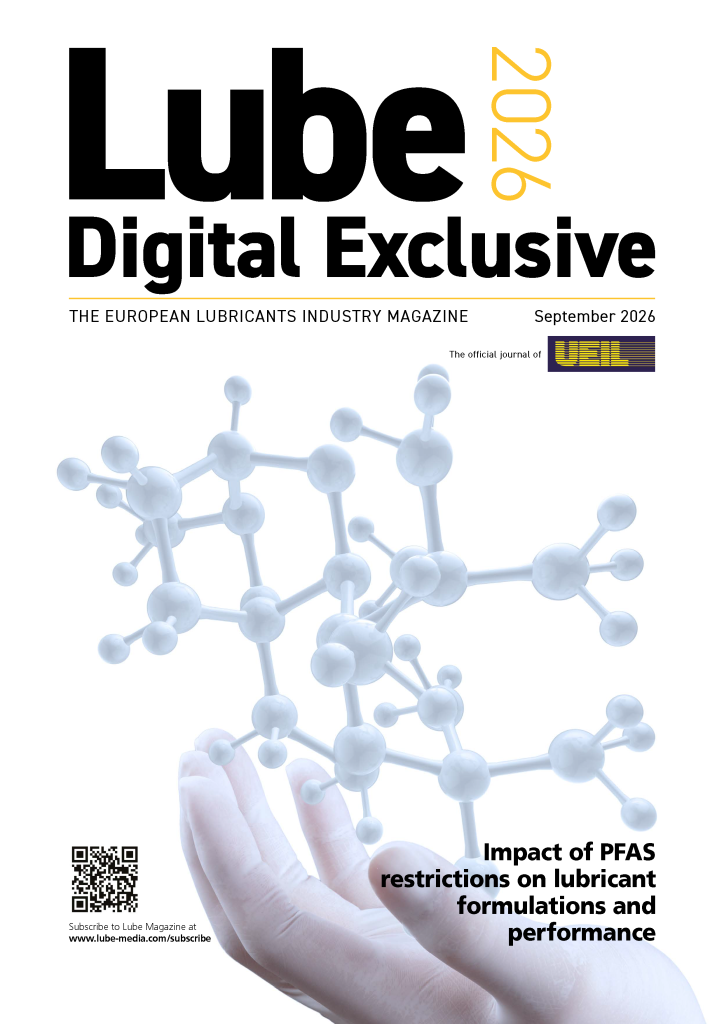
Per- and polyfluoroalkyl substances (PFAS) have long been used in lubricant formulations because of their exceptional thermal stability, low surface energy, and chemical inertness. These properties help reduce friction, improve wear resistance, and extend lubricant life under demanding operating conditions. However, concerns about their persistence, bioaccumulation, and potential risks to human health and the environment have led to increasingly stringent global regulations and proposed bans. As a result, lubricant formulators are under pressure to identify durable, high-performance alternatives.
This article by Dr. Raj Shah and Sheena Chen, Koehler Instrument Company, and Sheena Chen, Amity Institute of Chemistry Research and Studies, Amity University, examines current PFAS regulations, explains the tribochemical and physicochemical roles PFAS play in conventional lubricants, and evaluates the performance trade-offs associated with their replacement. It also assesses emerging alternatives, including fluorine-free organosilicon additives, ionic liquids, hybrid nanoparticle systems, and bio-derived esters, for their ability to meet both performance and environmental requirements.